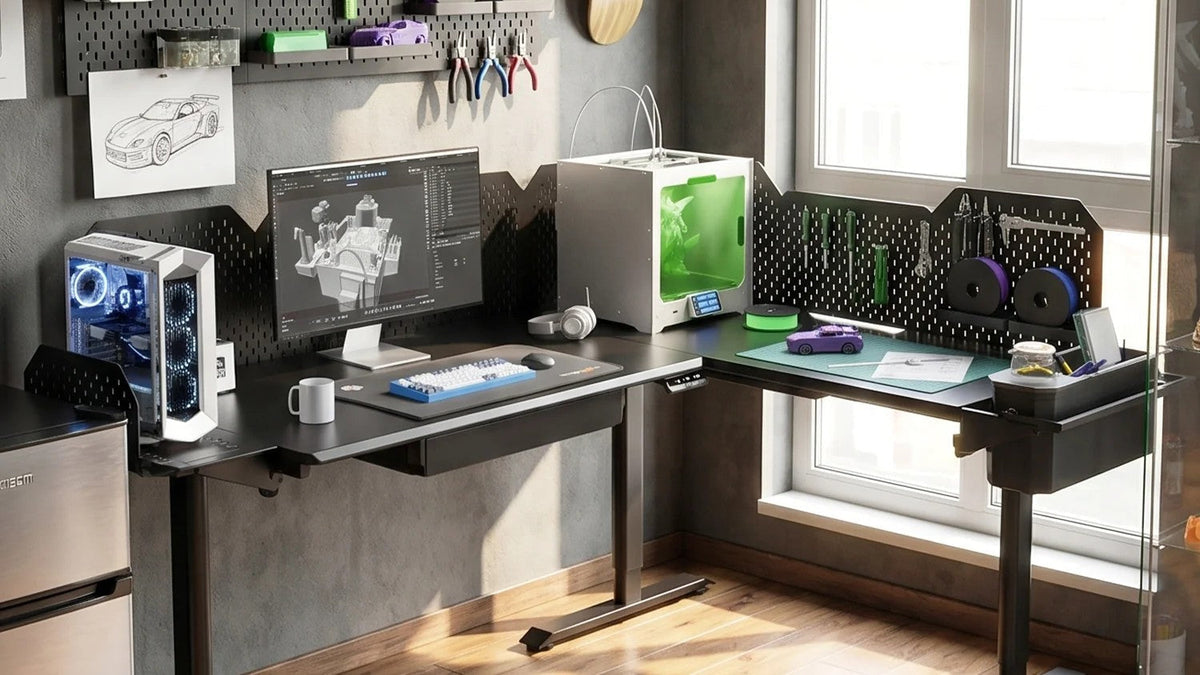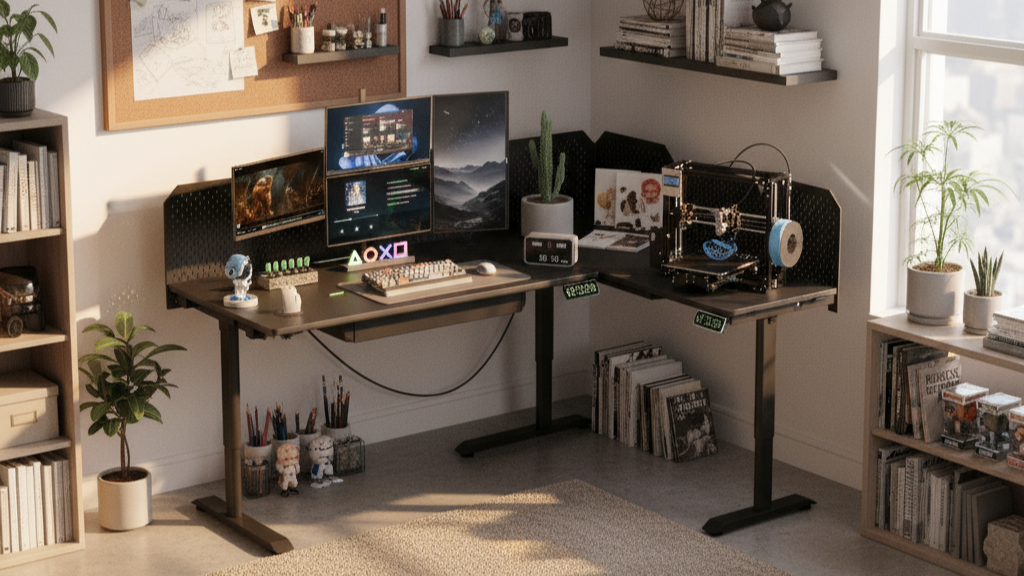
Both raise and lower a work surface, but they feel nothing alike in daily use. This guide compares manual (crank) and electric (motorized) standing desks on price, effort, speed, capacity, noise, and power. Then it points to where the CreatorOne and CyberOne Modular electric ranges fit if you decide motorized is the right call. Note: livtab sells electric desks only; manual desks below are a market category, and their figures are general market ranges, not livtab specs.

1. The Core Difference: Crank vs Motor
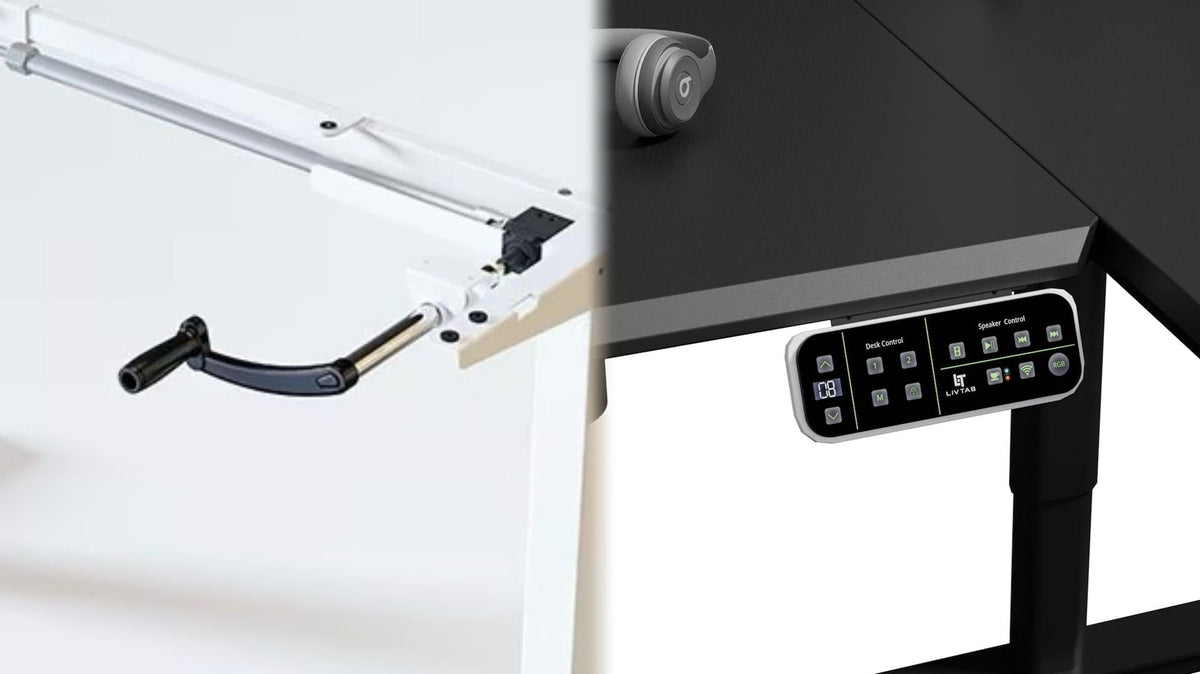
A manual standing desk uses a side crank you turn by hand; the screw or spindle lifts the legs. An electric desk hides a motor in each leg and runs off a control panel with up/down and memory presets. That single difference drives every trade-off below: cost, effort, and what happens when the power goes out.
- Manual: hand crank, no motor, no controller. Mechanically simple.
- Electric: dual or triple motors, control panel, usually memory presets. Driven by mains power.
2. Price: Where Manual Still Wins
Up front, manual desks are the cheaper way into sit-stand. You skip the motors, the controller, and the wiring, so the frame costs less. For a tight budget or a desk you will rarely adjust, that gap is real money. Electric frames cost more because you are paying for the motors and the convenience they buy, which matters most if you actually change height often.
3. Effort and Speed: Why Electric Feels Different
This is where the two stop feeling comparable. A manual desk makes you crank through the whole range by hand, which gets tedious if you sit and stand several times a day, and it's easy to skip, which defeats the purpose. An electric desk moves at roughly 35 mm/s (CreatorOne) and hits a saved preset with one tap, so changing height becomes a habit instead of a chore.
- CreatorOne electric: ~35 mm/s travel, 4 height presets. Specs from creatorone.com.
- CyberOne Modular electric: 10 height presets, app-controlled. Specs from livtab.com.
If you adjust once a week, a crank is fine. If you alternate daily, the motor pays for itself in friction you no longer feel.
4. Weight Capacity and Stability
Do not infer load capacity or stability from the drive type alone. CreatorOne rates the Main frame at 315 lb dynamic (630 lb static); CyberOne Modular has dynamic load ratings of 300–475 lb, depending on the layout. Manual desks on the market commonly land in a lower band. Roughly 150–250 lb dynamic is a typical range for crank frames (third-party market information, not livtab data, verify per model).
- CreatorOne Main: dynamic 315 lb (static 630 lb). Specs from creatorone.com.
- CyberOne Modular: dynamic load of 300 lb (Main), 365 lb (L-shape), or 475 lb (Extended L / U-shape). Specs from livtab.com.
- Manual crank (market range): ~150–250 lb dynamic. Third-party market info, verify per model.
The rating types differ, so do not compare the numbers head to head. Match each to your real load; for heavy or mixed gear, the electric frame's higher rating and stiffer legs win.
Static vs. Dynamic Load Capacity: What Makes a Modular Sit Stand Desk Stable?
What Makes a Standing Desk Stable? 4 Things That Matter
5. Noise and Power: The Trade-Offs
Manual desks are completely silent and need no outlet, a real plus in a shared room or during a power outage, when an electric desk simply will not move. Electric desks make a low hum: CreatorOne runs at ≤50 dB, CyberOne Modular around 55 dB, quiet enough for an office but not silent. The flip side is that an electric desk won't move during an outage, while a crank keeps working. Weigh a quiet room and backup use against daily convenience.
6. Who Should Pick Manual
A crank desk is the right tool for a narrow set of cases:
- Budget is the hard constraint and the desk moves rarely.
- You work in one spot (almost always seated or almost always standing) and adjust only to share the desk.
- You are in a rental or temp setup where no outlet or a power outage rules out motorized.
7. Who Should Pick Electric
If you sit and stand on a routine, the motor is what makes the habit stick. An electric desk, meaning the CreatorOne and CyberOne Modular ranges, gives one-tap presets, a fast quiet lift, and a higher, stiffer capacity for real workloads. For daily alternation, a home office, or any desk that carries monitors and gear, electric is the better long-term value even at the higher price.

FAQ
Are manual standing desks worth it?
For a tight budget or a desk you adjust rarely, yes. A crank gets you sit-stand height for less and needs no power. If you change height daily, the hand-cranking gets old fast and electric is worth the premium.
Is an electric standing desk better than a manual one?
For daily sit-stand use, yes. Presets and a quiet fast lift make height changes effortless, and electric frames rate higher and stay steadier at full height. Manual wins only on price, silence, and working without power.
How much cheaper is a manual standing desk?
Manual frames typically cost less because there is no motor, controller, or wiring. The gap varies by model and market, so compare the specific frames you are weighing rather than a fixed number.
Decided motorized is worth it?
Compare the CreatorOne frames and the CyberOne Modular configurator, and see the full module list in the accessories collection.
Keep reading: