Ask most people what makes a standing desk stable, and they'll give the same answer: "more legs." Four legs beat two, right?
It's the most common answer, and the least useful one. Leg count is one of the smallest factors in whether a desk actually wobbles at standing height. The real drivers are the ones you can check on a spec sheet: motor count, load capacity, frame stiffness, and footprint.

Four Things That Matter
1. Motor Count
Motors do the lifting, and how many you have changes how evenly a heavy desktop moves. A single motor drives the whole desk through one point, which twists the frame under load. Two or more synchronized motors lift from several points at once, so the desktop rises level instead of tilting. That even lift is a big part of why a desk feels stable, not just at the top but on the way up.
2. Load Capacity
A desk rated for 500 lb doesn't just hold more; it's built stiffer to earn that rating. Static capacity (what it holds at rest) and dynamic capacity (what it can lift while moving) both matter. A desk with a high dynamic rating was engineered to move real weight smoothly, which is the exact stress that makes weaker desks wobble.
3. Frame Stiffness
The frame is what flexes. Cold-rolled steel resists bending far better than thin or light materials, so the columns don't sway when you type or lean on them. This is the part you can't fix later. It's set by the frame's material and design.
4. Footprint
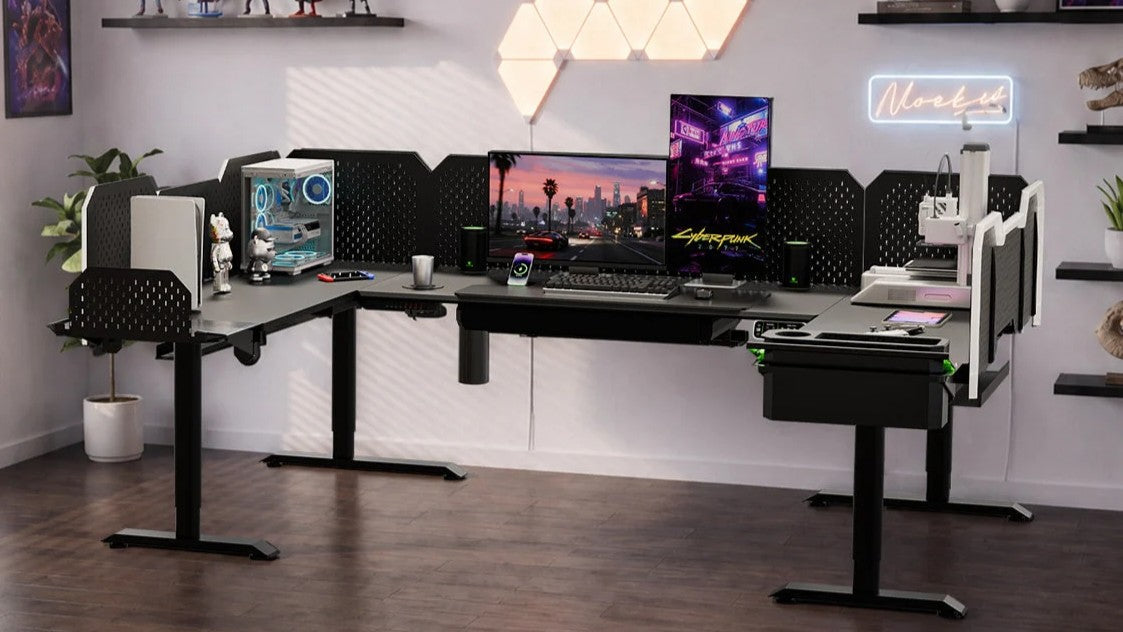
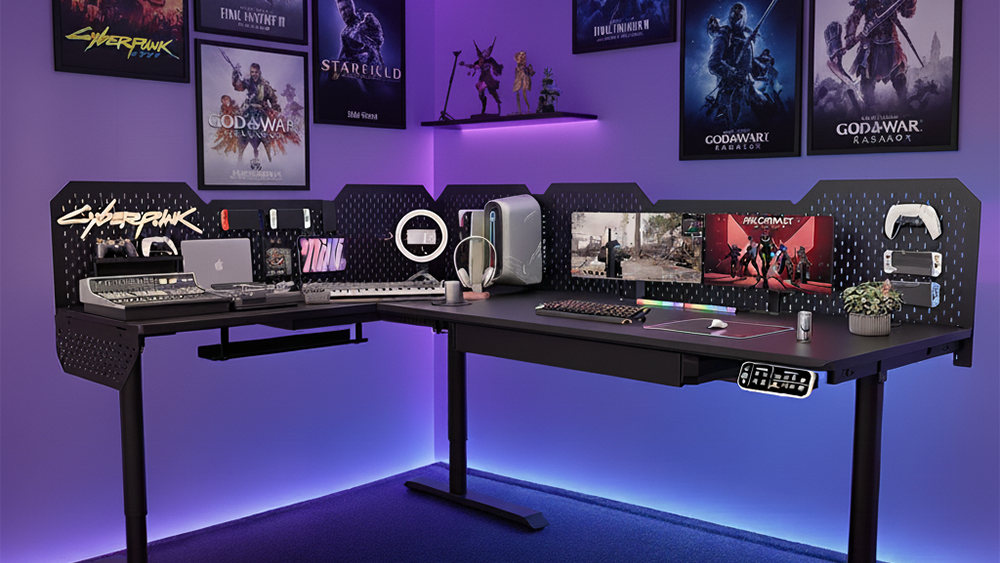
Stability is partly geometry. A wide, balanced base resists side-to-side and front-to-back movement better than a narrow one. A larger work surface, like an L or U shape, spreads weight across more support points, which is why bigger layouts can feel steadier than a compact single desk.
Motor Count vs Leg Count
The distinction clears up most of the confusion: legs decide how many support points the desk rests on. Motors decide how evenly the desk lifts its weight. They're related, but not the same thing.
A desk can have plenty of legs and still wobble if a single weak motor twists the frame on the way up. The reverse is also true: a desk with fewer legs but multiple synchronized motors can lift a heavy multi-screen setup smoothly and hold it steady. When you compare desks, look at the motor system and the load rating first. Leg count is the last thing that tells you how it will actually behave.

The CreatorOne Approach
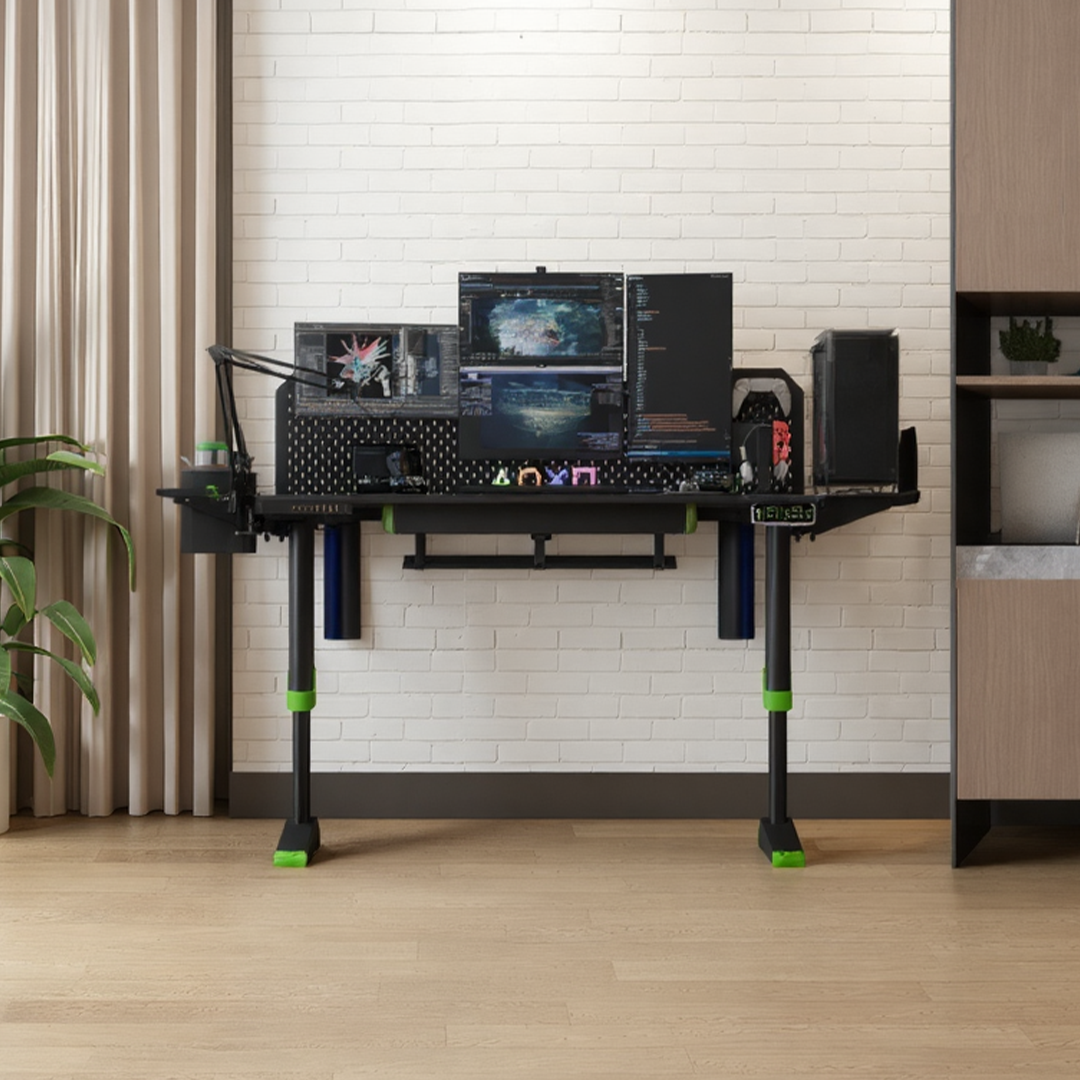
CreatorOne pairs each layout with the motor system and frame it actually needs, instead of a one-size-fits-all leg count:
|
Layout
|
Motor System
|
Static Load
|
Dynamic Load
|
Desktop Size
|
|
Main Desk
|
2 motors
|
630 lb
|
315 lb
|
63.0" L × 31.5" W
|
|
L-Shape
|
3 motors
|
760 lb
|
380 lb
|
86.6" L × 63.0" W
|
|
Extended L
|
4 motors
|
1000 lb
|
500 lb
|
86.6" L × 126.0" W
|
|
U-Shape
|
4 motors
|
1000 lb
|
500 lb
|
110.2" L × 63.0" W
|
Specifications vary by model and selected layout. Confirm the current height range, lift performance, noise, material, capacity and applicable warranty on the relevant product and policy pages. The key comparison is how the selected configuration supports the equipment and workspace you plan to use.
FAQ
Does more legs make a standing desk more stable?
Only marginally. Leg count changes how many support points the desk rests on, but the bigger factors are motor count, load capacity, and frame stiffness. A desk with fewer legs and multiple synchronized motors can be steadier than a many-legged desk with a weak frame.
What is the most important factor in standing desk stability?
Motor count and frame stiffness, together. Multiple synchronized motors lift the desktop evenly, and a stiff steel frame resists the flex that shows up as wobble. Load capacity is a close third, because a high rating usually means a stronger frame.
Is a 4-motor desk worth it?
If you run a large or heavy setup, an L or U shape, multiple monitors, a desktop PC, the extra motors keep the bigger surface lifting evenly. For a compact single desk, a 2-motor system is usually enough. Match the motor count to the size and weight of your setup, not to an abstract idea that more is better.
Build a Desk That Stays Steady
A stable desk isn't about leg count. It's about a frame, motor system, and load rating that match the setup you actually run. If you want the wobble gone at the source, start with those three.
Keep reading: