Smart Coffee Table Fridge Noise: LIVTAB's Published 36 dB Rating
A refrigerated coffee table belongs in the room where people relax, work, watch TV, or sleep. Its sound level therefore deserves the same attention as its dimensions and storage capacity.
LIVTAB lists a 36 dB noise level for every current refrigerated coffee table: LT60, LT60 Pure, LT90 Pro, LT90 FreezerX, LT135, and LT135 Pure.
One published rating across the range
The published figure is the same across the LIVTAB coffee table line.
| Model | Published noise level |
|---|---|
| LT60 | 36 dB |
| LT60 Pure | 36 dB |
| LT90 Pro | 36 dB |
| LT90 FreezerX | 36 dB |
| LT135 | 36 dB |
| LT135 Pure | 36 dB |
Because the models share the same listed rating, noise does not separate one LIVTAB coffee table from another on the specification sheet. The better way to narrow the choice is by room size, storage capacity, cooling range, and the features you plan to use.
Match the table to the room
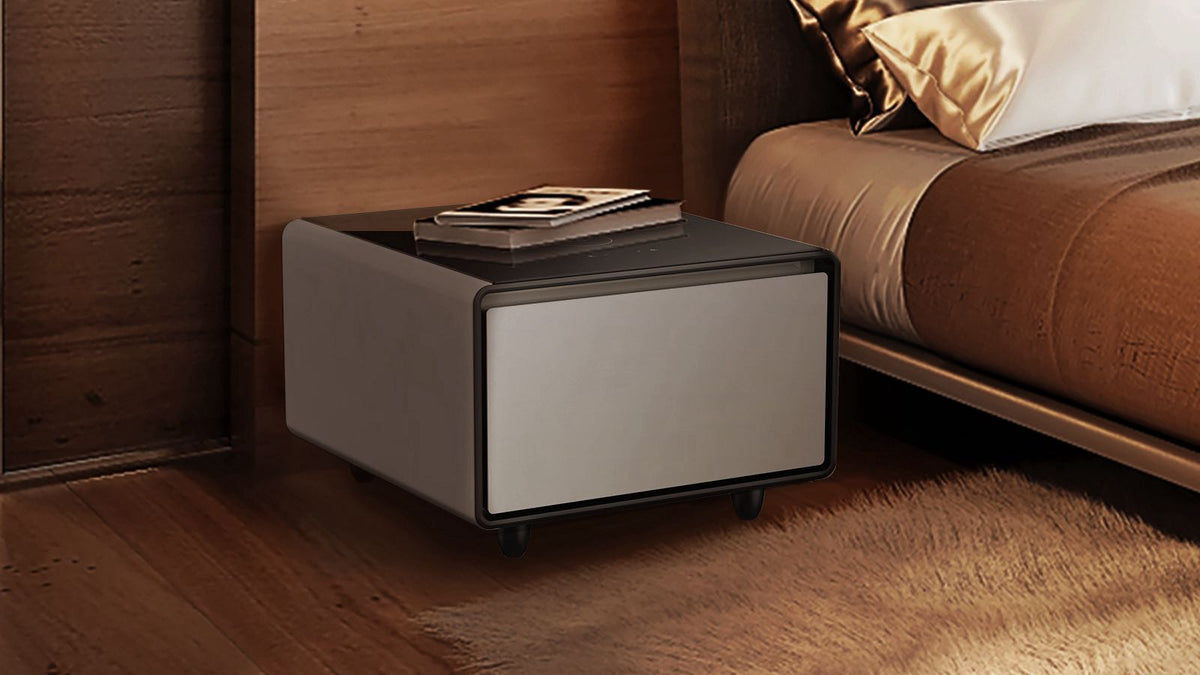
The LT60 and LT60 Pure are the smallest options. Each measures 26 × 28 × 18 inches and has 65L of refrigerated storage. The LT60 operates from 37°F to 46°F. The LT60 Pure uses a five-step mechanical dial and operates from 34°F to 54°F.
Those dimensions work well beside a chair, next to a desk, or near a bed where a full coffee table would take up too much floor space.
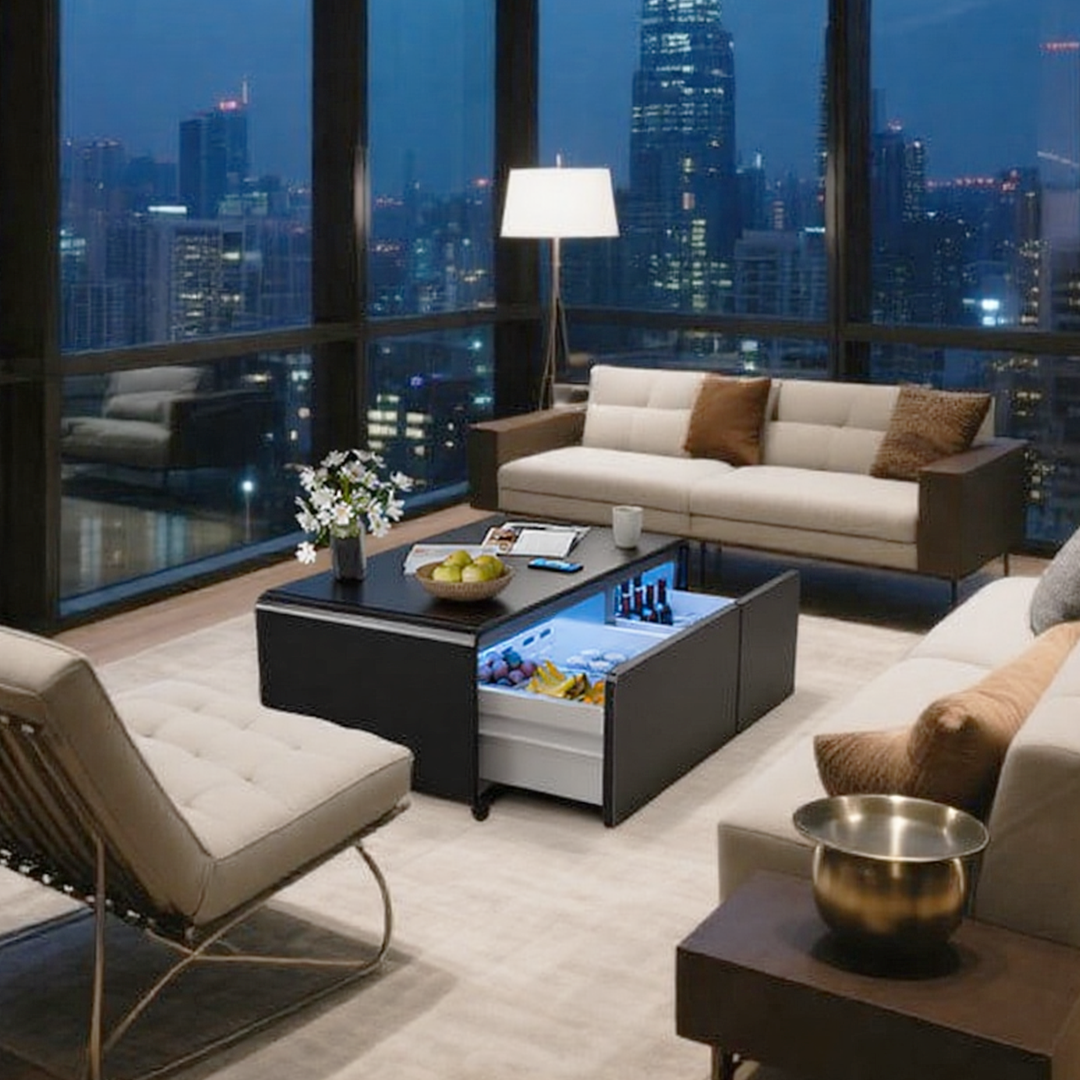
The LT90 Pro and LT90 FreezerX are wider at 41.5 × 23 × 18 inches. Both have 93L of storage. The LT90 Pro has two refrigerated zones, while the LT90 FreezerX has a refrigerator zone on the left and a freezer zone on the right.
The LT135 and LT135 Pure measure 51 × 28 × 18 inches and have 135L of storage across two zones. They are intended for larger seating areas where there is room to walk around the table and open both drawers comfortably.

Consider how the room is used
The LT60 includes 15W wireless charging, USB-A and USB-C ports, two 110V outlets, touch controls, and a motion-activated bottom light. It suits a compact room where a phone, laptop accessory, or bedside device needs a nearby power source.
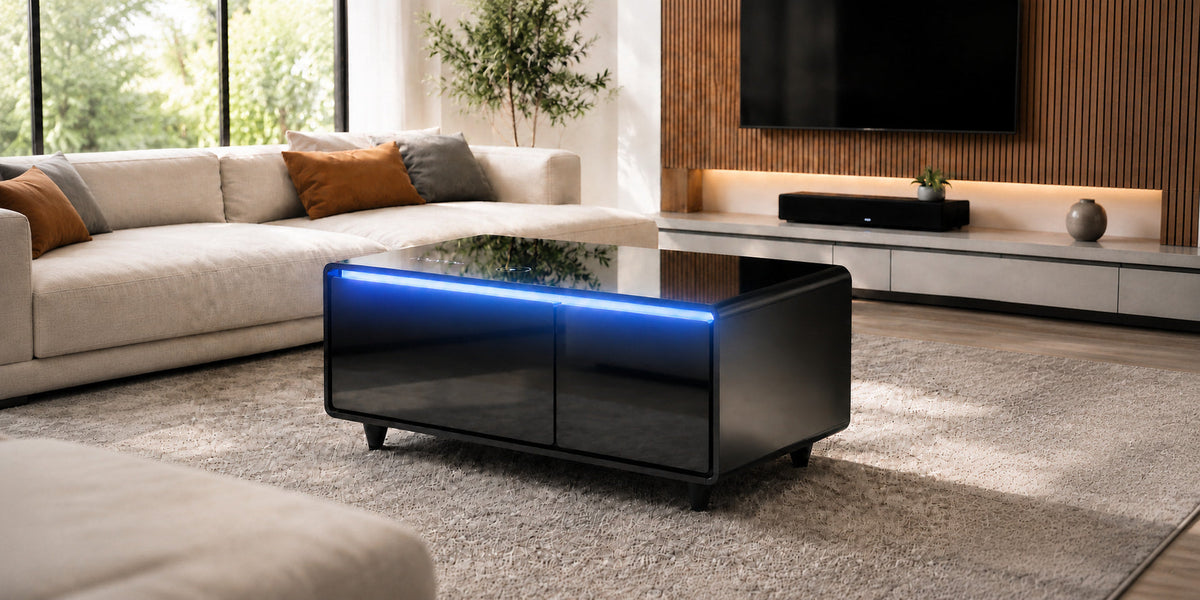
The LT90 Pro adds Bluetooth 5.0 audio, RGB ambient lighting, wireless charging, and USB ports. It is a fit for a living room or entertainment area where those features will be used regularly.
The LT90 FreezerX also includes wireless charging, USB-A and USB-C ports, Bluetooth 5.0 audio, RGB lighting, and a touch control panel. Its freezer zone operates from -11°F to 10°F. The refrigerator zone operates from 37°F to 54°F.
The Pure models keep the setup simpler. LT60 Pure and LT135 Pure have mechanical temperature controls and two 110V outlets. They do not include wireless charging, USB ports, speakers, or RGB lighting.
Before ordering, measure the room and plan where the table will connect to power. Leave enough space for the refrigerated drawers to open and for people to move around the seating area. The 36 dB rating is the same throughout the range, so the final choice comes down to the size and functions that suit the room.
LIVTAB LT90 Pro Smart Coffee Table with Fridge & Speakers
Smart Coffee Table Fridge Noise: LIVTAB's Published 36 dB Rating